The Forgotten Pulpit
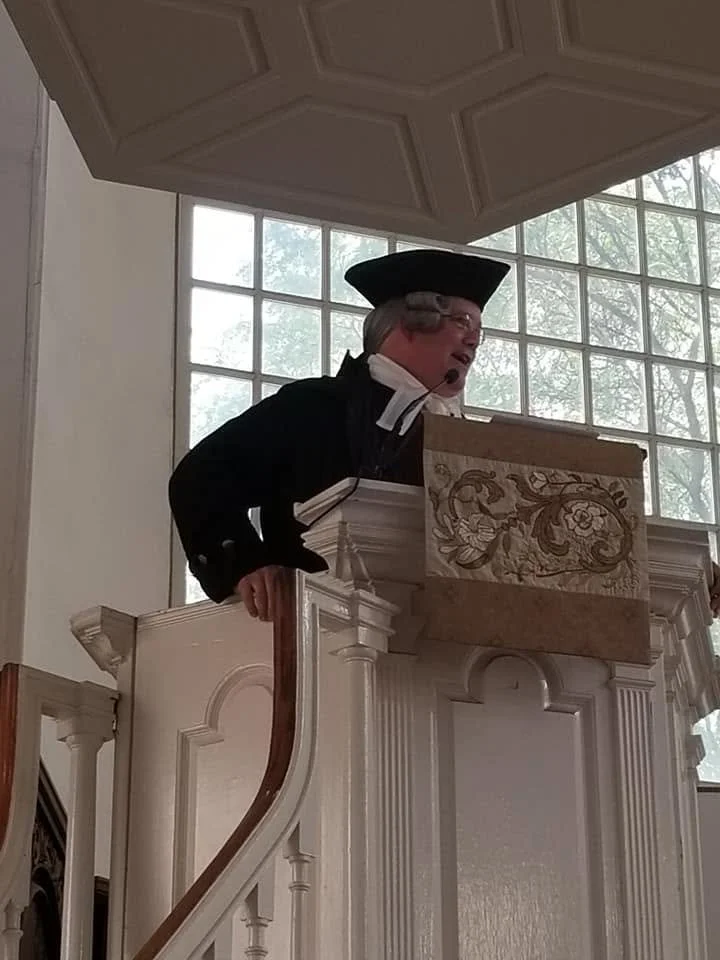
Peter Preble reads the Declaration of Independence from the historic pulpit of Old North Church, Boston, during a Fourth of July commemoration.
Recovering the overlooked voices of Revolutionary New England
Before the American Revolution was fought on battlefields, questions of liberty, conscience, authority, and resistance were being debated in the meetinghouses of New England.
From their pulpits, ministers helped their congregations wrestle with the political and moral questions of their time. Some defended resistance to British authority. Others counseled caution or loyalty to the Crown. Still others helped develop ideas about liberty, responsibility, and the relationship between conscience and government long before independence was declared.
Their stories remind us that the American Revolution was not simply a military struggle. It was also a struggle over ideas, loyalties, and the obligations people believed they owed to one another.
The Forgotten Pulpit brings these overlooked stories to life through engaging historical presentations, original research, and first-person living-history interpretation.
Drawing on the sermons, letters, and experiences of eighteenth-century New England ministers, historian, minister, and living-history interpreter Peter Preble invites audiences to discover the people and ideas that helped shape the American Revolution.
Programs and Presentations
The Forgotten Pulpit: Ministers and the Making of Revolutionary New England
An introduction to the ministers, sermons, and religious debates that helped shape the political imagination of Revolutionary New England.
The Rev. Samuel West: From the Dartmouth Pulpit to Revolutionary Massachusetts
The story of a Dartmouth minister whose experiences in the American camp at Roxbury and whose 1776 Massachusetts Election Sermon illuminate the relationship between religious conviction and revolutionary politics.
Liberty from the Pulpit: The Massachusetts Election Sermon Tradition
An exploration of the annual sermons preached before Massachusetts' political leaders and the questions of government, liberty, conscience, and public responsibility they raised.
The Forgotten Pulpit Comes to Your Town
A locally researched presentation exploring the ministers, congregations, and religious communities that shaped a town's experience of the Revolutionary era. Programs can be developed in collaboration with historical societies, museums, libraries, and local heritage organizations.
Living History
Selected programs are available as first-person historical interpretations in period-appropriate attire, allowing audiences to encounter Revolutionary New England through the perspective of someone who lived in that world.
Programs are also available as contemporary illustrated lectures, with opportunities for audience questions and discussion.
About Peter Preble
The Rev. Peter Preble is a New England minister, writer, historical researcher, and living-history interpreter with a particular interest in the intersection of religion, politics, and everyday life in Revolutionary America. His work explores the often-overlooked role of New England clergy in shaping the ideas of liberty, conscience, and public responsibility.
Through historical presentations and first-person interpretation, Peter brings eighteenth-century voices to contemporary audiences, drawing on original sermons, letters, and historical records. He has presented programs on the Rev. Samuel West of Dartmouth and participated in historical commemorations, including reading the Declaration of Independence from the pulpit of Boston's Old North Church.
His approach combines careful historical research with engaging storytelling, inviting audiences to consider not only what people believed in the eighteenth century, but why those beliefs mattered.
Invite The Forgotten Pulpit
The Forgotten Pulpit is available for historical societies, museums, libraries, churches, schools, heritage organizations, and Revolutionary anniversary commemorations throughout New England.
Programs can be tailored to local history, audience interests, and event formats.
For program inquiries use contact button above